
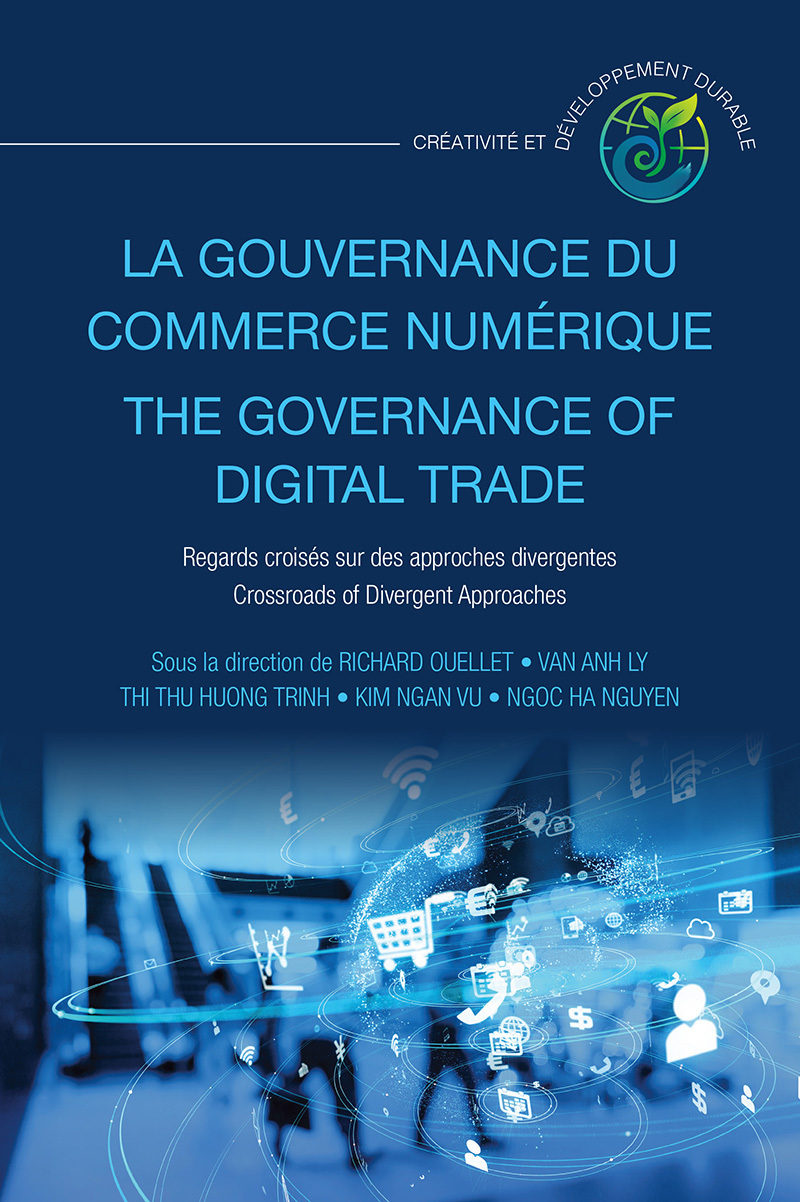
La gouvernance du commerce numérique : regards croisés sur des approches divergentes / The Governance of Digital Trade: Crossroads of Divergent Approaches
- Dirigé par :
-
Nb. de pages:
460
Le développement des nouvelles technologies et l’essor du commerce transfrontalier de services soulèvent des questions juridiques complexes, sans réponses claires dans le droit international actuel. Trois règlementations sont observées pour tenter de réguler ces pratiques : 1) nationales, limitées par leur portée territoriale ; 2) régionales, qui manquent d’harmonisation et de cohérence ; et 3) multilatérales, confrontées à des divergences d’intérêts entre les parties.
Description
L’essor du commerce numérique soulève une problématique inédite qui affecte le fonctionnement du commerce international. Devant la difficulté du système commercial multilatéral à produire des règles et des disciplines permettant de bien régir à large échelle ce nouveau phénomène, les gouvernements des nations commerçantes ont mis en place des cadres juridiques pour répondre aux défis les plus immédiats. Ces cadres sont nationaux ou convenus sur une base bilatérale ou régionale. Les intérêts des acteurs, privés ou publics, du commerce numérique sont tantôt convergents, tantôt divergents. Ainsi, le corpus juridique applicable à un commerce qui se dit mondial et qui ne connait ni les frontières ni les distances est éclaté. Il est donc apparu utile de croiser les points de vue de juristes provenant de traditions juridiques différentes et d’horizons variés pour voir comment sont appréhendées des questions comme la protection du citoyen-consommateur, le contrôle exercé par l’État ou l’ouverture des marchés numériques. Cet ouvrage réunit 19 contributions qui reflètent la diversité et la coexistence parfois harmonieuse, parfois difficile, des cadres juridiques servant à régir le commerce numérique. Il est le fruit des travaux de chercheurs issus de quatre continents. //
The rise of digital trade raises a new issue that affects the functioning of international trade. Faced with the multilateral trading system's difficulty in producing rules and disciplines to effectively govern this new phenomenon on a large scale, the governments of trading nations have established legal frameworks to address the most immediate challenges. These frameworks are national or agreed upon on a bilateral or regional basis. The interests of stakeholders, private or public, in digital trade are sometimes convergent, sometimes divergent. Thus, the body of law applicable to a trade that claims to be global and that knows neither borders nor distances is fragmented. It therefore seemed useful to bring together the perspectives of legal scholars from different legal traditions and varied backgrounds to examine how issues such as the protection of the citizen-consumer, state control, and the opening of digital markets are addressed. This book brings together 19 contributions that reflect the diversity and sometimes harmonious, sometimes difficult coexistence of the legal frameworks used to govern digital trade. It is the result of the work of researchers from four continents.
The rise of digital trade raises a new issue that affects the functioning of international trade. Faced with the multilateral trading system's difficulty in producing rules and disciplines to effectively govern this new phenomenon on a large scale, the governments of trading nations have established legal frameworks to address the most immediate challenges. These frameworks are national or agreed upon on a bilateral or regional basis. The interests of stakeholders, private or public, in digital trade are sometimes convergent, sometimes divergent. Thus, the body of law applicable to a trade that claims to be global and that knows neither borders nor distances is fragmented. It therefore seemed useful to bring together the perspectives of legal scholars from different legal traditions and varied backgrounds to examine how issues such as the protection of the citizen-consumer, state control, and the opening of digital markets are addressed. This book brings together 19 contributions that reflect the diversity and sometimes harmonious, sometimes difficult coexistence of the legal frameworks used to govern digital trade. It is the result of the work of researchers from four continents.
Autres publications

Suggestions de lecture

Droit
61,00 $ - 49,00 $
Papier, PDF ou ePub


Droit
27,00 $ - 21,00 $
Papier, PDF ou ePub

Droit
38,00 $ - 30,00 $
Papier, PDF ou ePub
.jpg 580w)

Droit
26,00 $ - 21,00 $
Papier, PDF ou ePub